18 challenges faced by the MDG
1. Lack of synergy among the goals
2. Global economic crisis
3. Lack of interconnectivity between the goals
4. Less consideration to environmental and economic dimensions
5. Narrowed focus to equity issues. Example: gender focus was only explicitly mentioned in MDG 3 and 5 while missing on other goals
6. Limited understanding about the holistic concept of MDG among public health professionals
7. Lack of full ownership and leadership
8. Lack of transparency in the use of MDG resources
9. Lack of enabling environment
10. Limited funding for gender equality and women rights
11. Lack of policy space for poorer countries
12. Political instability
13. Existing gaps between the poorest and the richest; rural and the urban areas
14. Compromised focus on climate change and environmental degradation
15. Conflicts and disputes within and among the countries
16. Lack of access to basic health services
17. Although not explicitly explained, goals of MDG were mainly centered on the issues of underdeveloped and developing countries
18. Less goals focused for developed nations
Additionally
The Millennium Development Goals (MDGs) faced several challenges in their implementation. Some of the key challenges included inadequate funding, lack of political will, disparities in progress between countries, and difficulties in measuring progress accurately. Additionally, there were challenges in addressing complex issues such as poverty, gender inequality, and environmental sustainability, which required comprehensive and coordinated efforts from governments, organizations, and communities. Despite these challenges, the MDGs played a significant role in raising awareness and mobilizing action towards global development.
Some specific challenges related to the Millennium Development Goals (MDGs) include poverty reduction, improving maternal health, combating HIV/AIDS, promoting gender equality, and ensuring environmental sustainability. These are just a few examples, but there are many more!
Author(s): [ACE🇺🇲]
Year: 2024
Title: Challenges Faced by the Millennium Development Goals (MDGs)
Source: [unlimited]
URL: [https://bihanace03sportiessport.wordpress.com]
Bihan’s O sport!
Get your original and affordable sport accessories
Do you need quality Boots, Jerseys, socks, balls, cones, gloves, track suits, shin guards, etc Bihan’s o sport is the best place to get those
Stand a chance of getting free customized jerseys when you make a purchase.
CONTACT US
Mobile; 08165590738
Instagram – enochdami22718
Twitter – @enochabdulsalam
Facebook – Damilare Abdulsalam




Day 2 of 24 international conference/annual general meeting.
Professor abdullahi Patrick adc president, Prof Peter Dean faculty of communications, Prof Chris ogbonna USA and all distinguished guest of honor present at the 24 annual international conference.
Dr Chris ogbonna lectured on the the growth of mobile phone users globally
Last 30 years tremendous DM growth globally
Over 90% of the population in half of the world (about 100 countries of the world) own a mobile phone. Globally mobile phone have grown exponentially.
Global mobile growth Data
2020 14 billion
2021 15 billion
2022 17 billion
2023 20 billion
Zimbabwe population 17million as at 2021 they had 14million mobile phone user and 2023 15million mobile phone users.
Ghana population is 35million and as at 2023 has 45 million mobile phone users.
South Africa population is at 62 million and mobile phone users grow to 113 million.
Kenya population at 55 million and mobile phone users are at 65 million.
He further spoke about DM benefits which are
• Exposure of human rights abuses
• Helps to create awareness and remove stigma
• Enhances global reach and connectivity
• Promotes business and marketing opportunities
• Makes education and learning easy and accessible.
• Facilities information sharing
What can be done to balance freedom and regulation
• Look at other countries (not to copy but to adapt)
• Government, NGOs can help counter fake news
• News media can help play critical role (fact check on information on social media).
He concluded thus, despite DM’s contributions to GDP, economy,etc little attention is paid to its psychological and health effect on the society.
Gsm based stationed in the neighborhoods have health risks from radiation, Cancer, etc.
ATHLETICSNigerian sprinter Divine Oduduru gets 6-year doping ban
Nigerian sprinter Divine Oduduru has been given a six-year ban for breaching two doping violations.
The Athletics Integrity Union, AIU, said on Thursday that the Nigerian was handed a four-year ban for possessing prohibited substances, attempted use of a prohibited substance, and an additional two years for “aggravating circumstances.”
The former world junior silver medalist was also ordered to pay $3,000 to the World Athletics for its legal fees and other expenses regarding the case.

Leadership by example on campus
Also known as community service, mallam Ibrahim Bala department of Mass communication HND 2 displayed selflessness and humility by ensuring that the environs for learning is conducive for its habitants.As shown in the video attached, he repeated tried to create passage for a stagnant water in front of the classroom which could result to the littering of the classroom and also lead to the spread of disease had he not come to the rescue.This act demonstrate leadership by example, humility, selflessness and love for the institution and it’s environsNot bothered about what people would say or do about his actions. Cleaning the environment of learning is super important! It helps create a positive and healthy space for studying. Plus, a clean environment can boost focus and productivity.
Let’s keep our study areas tidy and organized!
NEW EDUCATIONAL RESOURCES TO PTD KADPOLY
The administration of the kaduna polytechnic has provided new learning resources;chairs to be specific 6th October 2023 to the printing technology department (ptd) To foster effective and efficient academic experience in Kadpoly.
According to the source the old chairs were carried out for repairs as contained in the photos below while the new ones were brought in by the security personnels and bystanders present at the time.
This is to ensure that students are comfortable in the academic environment, classes especially as this is the first among the series of programs they have in stall for the institution.
Many of the students present were thrill and impressed with the exercise and expressed thier joy in the presence of the members of the administrative board present today.


Dollar to Naira exchange rate under the past cbn Governors
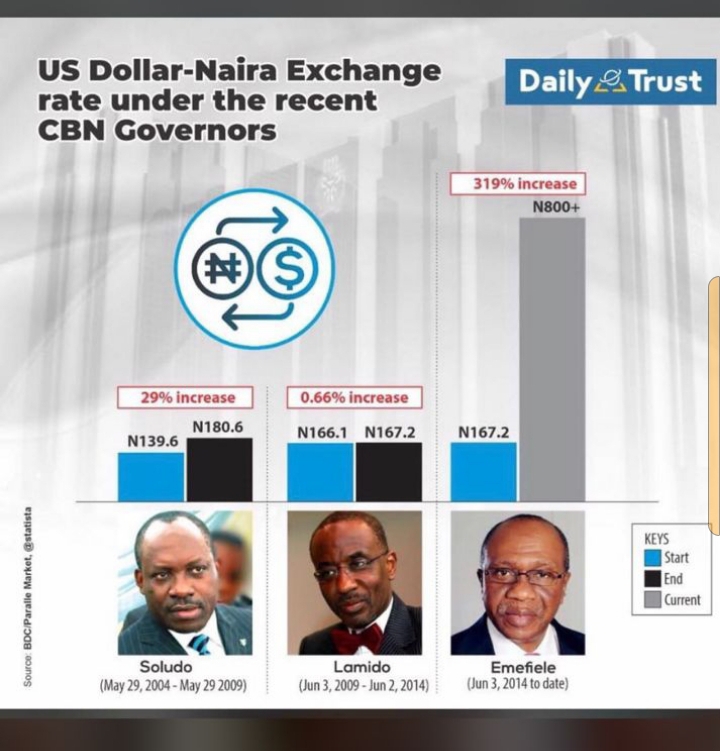
‘ In the last 6 months alone, Naira has been devalued twice as Nigeria battles to manage its currency pressure due to the oil price crash of 2020′
While the exchange rate has been devalued by every single one of Nigeria’s last 5 CBN Governors between 1982 and today, some Governors have fared far better than others in the management of the foreign exchange under their tenure.
If you were to guess the one economic problem that every Nigerian and business has struggled with regardless of their wealth status in the country, it would be the persistently declining exchange rate. In the last 38 years, the United States Dollar value has soared 55,998 percent against Naira in the official exchange rate market, moving from N0.67 to N379 as at Friday market close. This unequivocally puts Nigerian Naira among the worst performing currencies in the world in the last 4 decades.
The most superior exchange rate management performance was achieved by Sanusi Lamido Sanusi who under his stewardship the Central Bank managed to keep annual devaluation rate around 1.2 percent during his 5- year tenure as CBN Governor. Lamido Sanusi was CBN Governor between 2009 and 2014, during this period crude oil price rallied 38 percent from $80 to $110, proving the required earnings support to ensure Naira stability. Under Sanusi, dollar exchange rate moved from N148 to N157.
Closely behind Sanusi was Charles Soludo who achieved an average annual devaluation of just 2.1 percent during his 5-year tenure between 2004 and 2009. While Soludo is widely remembered for the banking industry recapitalization, he is not given due credit with his impressive management of the Naira despite the crash in crude oil price in 2008. Crude oil price rallied 143 percent between 2004 and 2008 before crashing by 41 percent between 2008 and 2009 during the Global Financial Recession. In 2004, crude oil traded at $37.66, rose to $91.48 in 2008 and fell to $53.48 in 2009. Under Soludo, the dollar exchange rate moved from N133 to N147.
Joseph Oladele Sanusi who also spent 5 years at the helm of CBN between 1999 and 2004 was the third best Exchange rate manager amongst the past 5 CBN Governors. During his tenure, the average annual devaluation rate was just 7 percent although crude oil price grew by 127 percent during his 5 year tenure. Slow devaluation pace of this nature now seems like a lifetime ago considering the rate at which Naira has been devalued in recent times.
Under the stewardship of Godwin Emefiele, the current CBN governor, average annual devaluation in his active 6-year tenure is 15.8 percent. In the last 6 months alone, Naira has been devalued twice as Nigeria battles to manage its currency pressure due to the oil price crash of 2020. When Emiefele began his tenure, dollar exchange rate moved from N157.3 to N379 on Friday. Crude oil price has fallen roughly 60 percent since Emefiele took charge of CBN.
The worst 2 exchange rate managers were Abdulkadir Ahmed and Paul Agbai Ogwuma who under their tenures, average annual devaluation rates were 37.2 percent and 27.2 percent respectively. Ahmed led the Central Bank between 1982 and 1993, during this period, dollar exchange rate moved from N0.67 to N21.88, marking the worst decade for Nigeria’s Naira. Ogwuma was Governor between 1993 and 1999 and the dollar exchange rate moved from N21.88 to N94.88 at the end of his tenure.
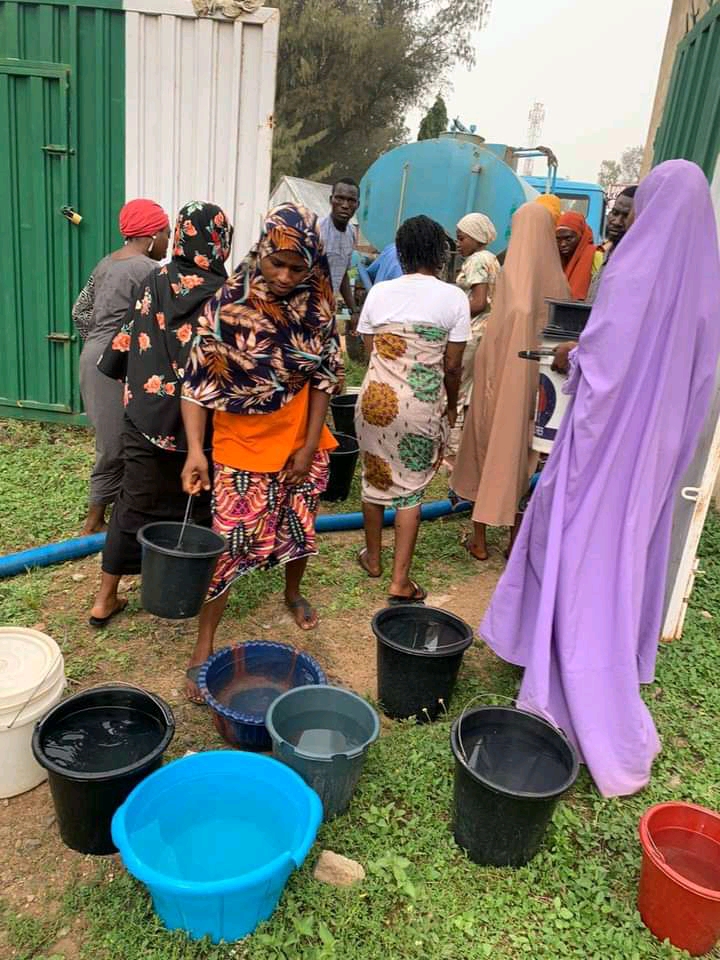
WATER TO HOSTEL BY SUG
Sequel to the complains from the teeming students of Kaduna Polytechnic concerning lack of water and light.
The leadership of the Student Union Government under the stewardship of Comr Muhammad Aliyu Mangal swift to action by giving directives to the welfare secretary for the provisions of 5 tanks of water for the student living in our various hostels and also bought diesels to power all the generators to enable the student have source of power for reading their books so as to be able to prepare well for their various examination. Because one of the basic agenda of the union is student welfarism and good academic performance.
Be rest assured of our proactiveness for the Student of our prestigious citadel of learning.
Signed
Comr Muhammad Aliyu Mangal
SUG P



Public Notice! To All Kadpoly StudentPlease ensure that you bring along some form of identification, such as your admission letter, school fees receipt, ID card, or a message from the security office, when you come to school on Monday. It is important to have these documents with you as without any form of identification, you will not be granted entry to the Kaduna Polytechnic. Thank you.

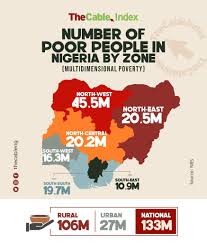
The population of poor people in Nigeria
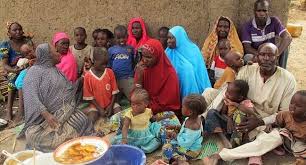
Poverty is a significant issue in Nigeria, with a large number of people living below the poverty line. According to recent data, around 40% of the population, which is approximately 83 million people, are considered to be living in poverty. This means they struggle to meet their basic needs, such as food, shelter, and healthcare. Efforts are being made to address this issue through various poverty alleviation programs and initiatives. It’s important to raise awareness and support those in need to create a more equitable society.
! Poverty in Nigeria is a significant issue that affects millions of people. According to recent statistics, around 40% of the population, which is approximately 83 million people, live in poverty. This means they struggle to access basic necessities like food, clean water, healthcare, and education.
The poverty rate is higher in rural areas compared to urban areas, with about 52% of rural dwellers living in poverty. Additionally, the poverty rate is higher in the northern regions of Nigeria compared to the southern regions.
Unemployment also contributes to poverty in Nigeria. The unemployment rate stands at around 33%, with a higher rate among young people. Limited job opportunities and underemployment make it challenging for individuals and families to escape poverty.
It’s important to address these challenges by implementing strategies such as creating more job opportunities, improving access to education and vocational training, and providing social welfare programs. By focusing on these areas, we can work towards reducing poverty and improving the lives of Nigerians. 🇳🇬💪
To tackle poverty in Nigeria, it requires a comprehensive approach involving multiple stakeholders. Here are a few strategies that can make a difference:
1. Economic Empowerment: Promote job creation and entrepreneurship by providing skills training, access to capital, and business support to individuals and communities.
2. Education and Skills Development: Enhance access to quality education and vocational training programs, equipping people with the skills needed for better employment opportunities.
3. Social Safety Nets: Establish social welfare programs that provide financial assistance, healthcare, and other essential services to vulnerable populations, ensuring a basic standard of living.
4. Agricultural Development: Invest in the agricultural sector to boost food production, increase farmers’ income, and improve rural livelihoods.
5. Infrastructure Development: Improve access to basic infrastructure like roads, electricity, and clean water to stimulate economic growth and enhance living conditions.
6. Women Empowerment: Promote gender equality and empower women by providing equal access to education, healthcare, and economic opportunities.
7. Good Governance: Enhance transparency, accountability, and the rule of law to combat corruption and ensure efficient utilization of resources for poverty reduction initiatives.
8. Collaborative Partnerships: Foster partnerships between the government, civil society organizations, and the private sector to leverage resources, expertise, and knowledge for effective poverty alleviation efforts.
By implementing these strategies and working together, we can make progress in reducing poverty and improving the lives of people in Nigeria.

 O! SPORT